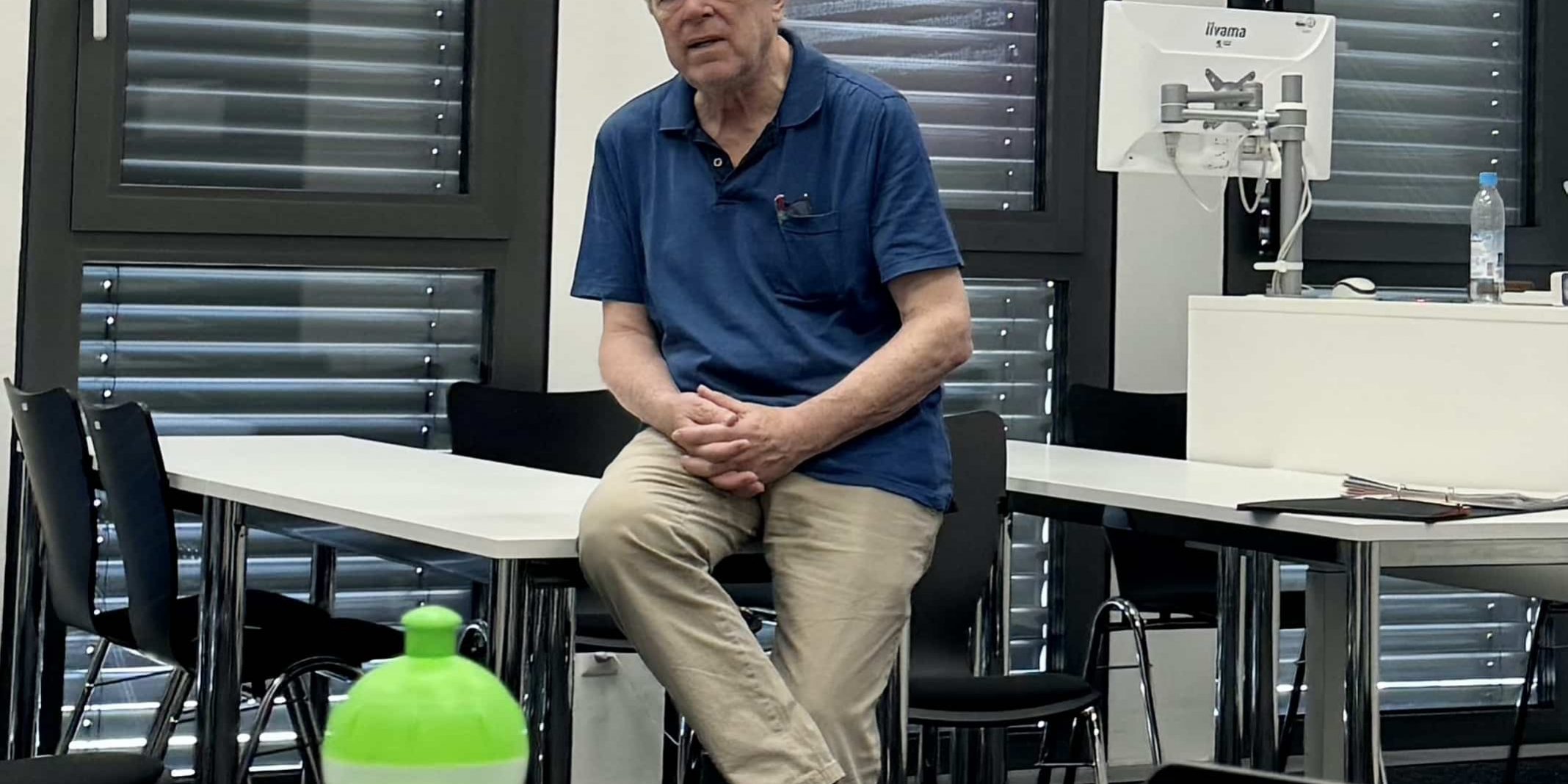
Structure and Content of the Modules in Summer Semester 2026
First module: MBTI and 16PF as introduction – methodologically effective!
I began the first day of the initial two day module with the MBTI—indeed not the typical starting point for a course on differential and personality psychology! In a group exercise, we moved from self-assessment to the “reported type” and finally to the “best fit.” This surely motivated the participants right away. However, one participant suggested that a validated test (implying an objective, standardized instrument) would have been a better starting point. I will have to see how I can follow this proposal henceforth.
On the second day, we integrated the self-assessment with the test result (reported type), lastly. The outcome was astonishing: generally there was a high level of overlap or sameness between self-assessment and test results among all participants. The immediate takeaway: everyone had a good grasp of their own personality! I then introduced the 16PF as a historical precursor and a gateway to the Five-Factor Model (FFM). Its author, Raymond B. Cattell, is described in the literature as a pioneer—or even the father—of the FFM. Student presentations on this topic provided an introduction to exploratory factor analysis, a method central to differential and personality psychology. Using handouts, the participants compared job requirements for psychologist positions with applicant profiles—applying the 16PF in the process.
Second block: Comparison of MBTI and BFI-2 – scientifically important.
During the second in-person session, I had the participants compare their MBTI preferences with the factors of the BFI-2—that is, the Five-Factor Model. Once again, a high degree of correspondence emerged—naturally, with the exception of a neuroticism score in the MBTI. The ensuing discussion shed light on the distinction between theory, model, and traits, and their operationalization in tests…

The BFI-2 can be found at a different location online than before, but it remains accessible. We were able to complete the test together as a group and subsequently discuss both the test and the Big Five.
Third classroom module: the Freiburg Personality Inventory and ``popular`` tests
FPI: Clinical relevance, yet still a personality test
The presentations on the Freiburg Personality Inventory—and its predictive value or associations regarding clinical and forensic-psychiatric topics—were once again accurate in content and highly creative, yet involved minimal use of AI.
Popular methods: the Clifton StrengthsFinder
We have examined the CliftonStrengthsFinder (R) in detail and critiqued it against the standards of differential psychology and personality psychology. The topic of ipsative assessments—of which the MBTI is ultimately one—played a particularly significant role in this analysis.
Popular Theories: Hofstede's Cultural Dimensions
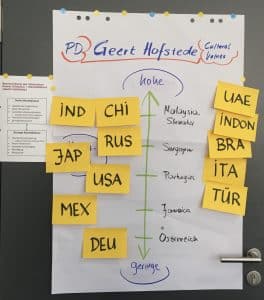
Afterward, they added their own positions using additional Post-it notes. In some dimensions, there was a strong alignment with the state, while in others, there was a sense of distance—precisely this variation was what I had wanted to highlight.
Intercultural Competence: is it a trait?
We worked through Julia Loboda’s test on intercultural competence as a whole group; however, splitting the class into two sets of two groups was not necessary. Consequently, we took the test as prescribed.
Use as a group test
Julia Loboda’s Intercultural Competence Test (TIHK, available in Germn language only) is on hand in parallel forms and i’s objective, reliable, valid, and even allowing for a cut-off score – however, it is unfortunately not standardized. Differential psychology would require these norms on the one hand, and on the other hand it was developed using subjects who closely resemble my participants! The TIHK offers critical situations between people from three different cultural backgrounds as items, also known as critical incidents. However, by dividing the test into two sets of two groups, I was able to clarify the students’ current level at the group level last semester. This served and will serve only as a starting point for further interactive work on the subject in the seminar.
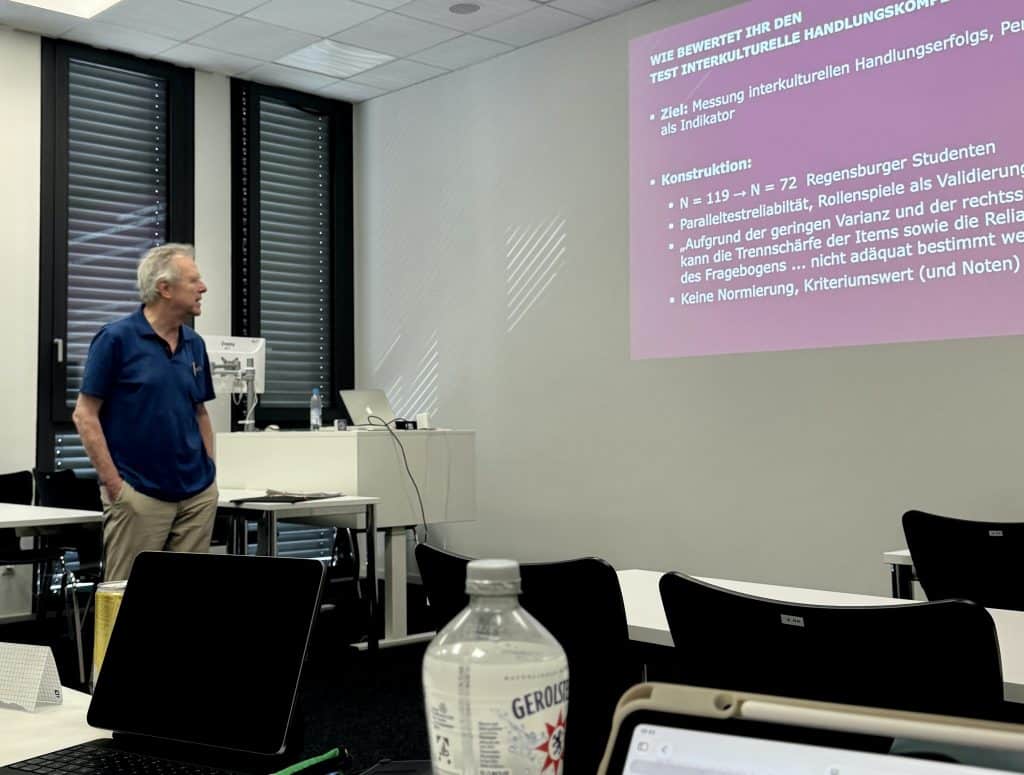
In subsequent discussion we concluded, among other things, that the TIHK is a criterion-oriented performance test. Great—from now I can distinguish it from norm-referenced tets!
Finally, I highly recommend studying psychology at Charlotte Fresenius University. At the Wiesbaden campus, you’ll find differential and personality psychology—and me. In integrated virtual and classroom settings.
Approach me directly for a Chat. Via ++49 89 817 92 97 or reiner@borretty.com
… or simply visit the homepage of Charlotte-Fresenius-University